September 25, 2026 Post by : Editorial Craft & Process
Writing the Scene You Are Avoiding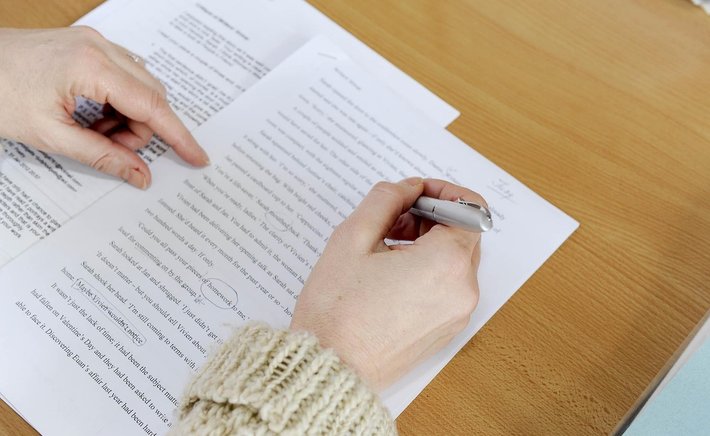
There is a moment every writer knows, usually somewhere in the second or third draft, when the book finally begins to feel like itself. The plot clicks into place. A character who was hazy suddenly has a face. A theme you did not know you were writing rises to the surface. This moment almost never happens in the first draft. It happens in revision, and that is exactly why revision deserves more respect than it usually gets.
Many aspiring authors treat revision as cleanup, the tedious part after the real writing is done. But revision is not janitorial work. It is the writing. The first draft is you telling yourself the story. The second draft is you telling it to a reader. Those are different jobs, and the second one is where craft lives.
I used to dread opening a finished draft, because all I could see was everything wrong with it. Now I look forward to it, because I know the draft is not a verdict. It is a map. Every weak scene, every flat line of dialogue, every place where the pacing drags is a signpost pointing to what the book is trying to become.
How to Approach a Draft You Have Not Seen in Weeks
First, put it away. A week is the minimum, a month is better. You cannot revise what you still remember writing, because you will read what you meant instead of what is on the page. Distance gives you the reader's eyes you need.
When you return, read the whole thing through once without changing a word. Take notes in the margin, but do not stop to fix. You are looking for the big shape: does the story escalate? Does the protagonist change? Does every scene earn its place? Only after this full read should you start making changes, and even then, start with structure before sentences. There is no point polishing a scene you are about to cut.
Then work in passes. One pass for plot and pacing. One for character. One for dialogue. One for prose at the sentence level. Trying to fix everything at once leads to paralysis and endless tinkering with page one while pages two hundred sit untouched.
Learning to Trust the Process
Revising a novel is a long conversation with yourself about what the book is really about. It requires patience, and it requires a willingness to kill things you love. That beautiful paragraph that does not serve the story? It has to go, or it has to find a home in another project. That clever subplot that goes nowhere? Cut it. The book gets stronger every time you choose the whole over the part.
The writers who finish books are not the ones who write perfect first drafts. They are the ones who learn to love revision, or at least to respect it, and who show up to the second draft ready to work. Your first draft gave you something to shape. The second draft is where you shape it. That is not a lesser task. It is the whole craft.


Author

22 feb,2025
This incident opened my eyes to the value of Insurance in general, so I decided to examine my personal and business insurance.




Comment (3)
The payments are made directly from one person to another without passing through a central bank or clearing house.
22 feb,2025
ReplyReading Like a Writer: Turning Admiration into Instruction
23 feb,2025
ReplyThe Quiet Power of Revision: Why the Second Draft Is Where the Book Lives
23 feb,2025
Reply