September 13, 2026 Post by : Editorial Writer's Life
The First Draft Is Not a Failure: Learning to Love the Mess
Long before writers had apps and highlighters, they kept commonplace books. These were personal collections of passages, quotes, observations, and fragments that the reader found worth keeping. Marcus Aurelius kept one. So did Milton, and Jefferson, and countless others whose names we no longer remember. The practice was simple: when something struck you, you wrote it down. Not to publish. Not to share. Just to have.
The commonplace book has fallen out of fashion, which is a shame, because it is one of the most quietly useful tools a writer can keep. It is not a journal, though it can hold journal-like entries. It is not a reading log, though it is built from reading. It is a place where the things that matter to you as a writer accumulate over time, and where patterns begin to emerge that you might not have noticed otherwise.
What Goes In
The answer is generous: anything that makes you pause. A sentence from a novel that you had to read twice. A line of dialogue overheard on a bus. A phrase from a poem that you cannot stop hearing. A paragraph from an essay that says something you have been trying to say for years. A description of weather that felt exactly right. A question someone asked you that you have not been able to answer.
You do not need to explain why a passage matters. In fact, it is often better not to. The point is not to analyze but to collect. Meaning accumulates on its own. A line you copied down three years ago will suddenly make sense in the context of what you are writing today.
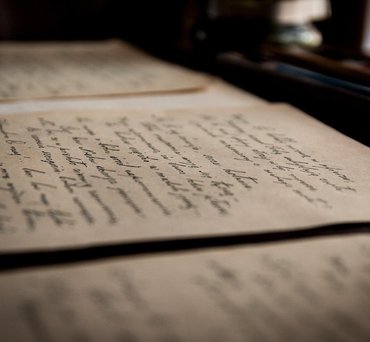
The physical form matters less than the habit. A cheap notebook works. So does a document on your phone, though there is something about handwriting that slows you down in a useful way. The slowness is part of it. When you copy a passage by hand, you feel the rhythm of the sentence in your body, not just your eyes.
How It Feeds Your Writing
The commonplace book is not a productivity system. It will not give you word count. What it will do is build a reservoir. When you sit down to write and feel like you have nothing, you can open the book and find that you have been filling it all along. The lines you collected are not yours to copy, but they are yours to learn from. They show you what you admire. They show you what you notice. Over time, they show you what you are trying to become as a writer.
There is also a practical benefit: the commonplace book trains your ear. Writers develop their sense of language by reading widely and paying attention, and the act of deciding what to keep is itself a kind of education. You are not just consuming words. You are choosing them.
Start small. One entry a week is enough. Keep it somewhere you will actually open. And do not worry about whether what you are collecting is impressive. The commonplace book is not for anyone else. It is for the writer you are slowly becoming.


Author

22 feb,2025
This incident opened my eyes to the value of Insurance in general, so I decided to examine my personal and business insurance.




Comment (3)
The payments are made directly from one person to another without passing through a central bank or clearing house.
22 feb,2025
ReplyWhen the Words Will Not Come: Writing Through Doubt and Dry Spells
23 feb,2025
ReplyThe Slow Writer's Advantage: Why Taking Your Time Makes Better Stories
23 feb,2025
Reply